
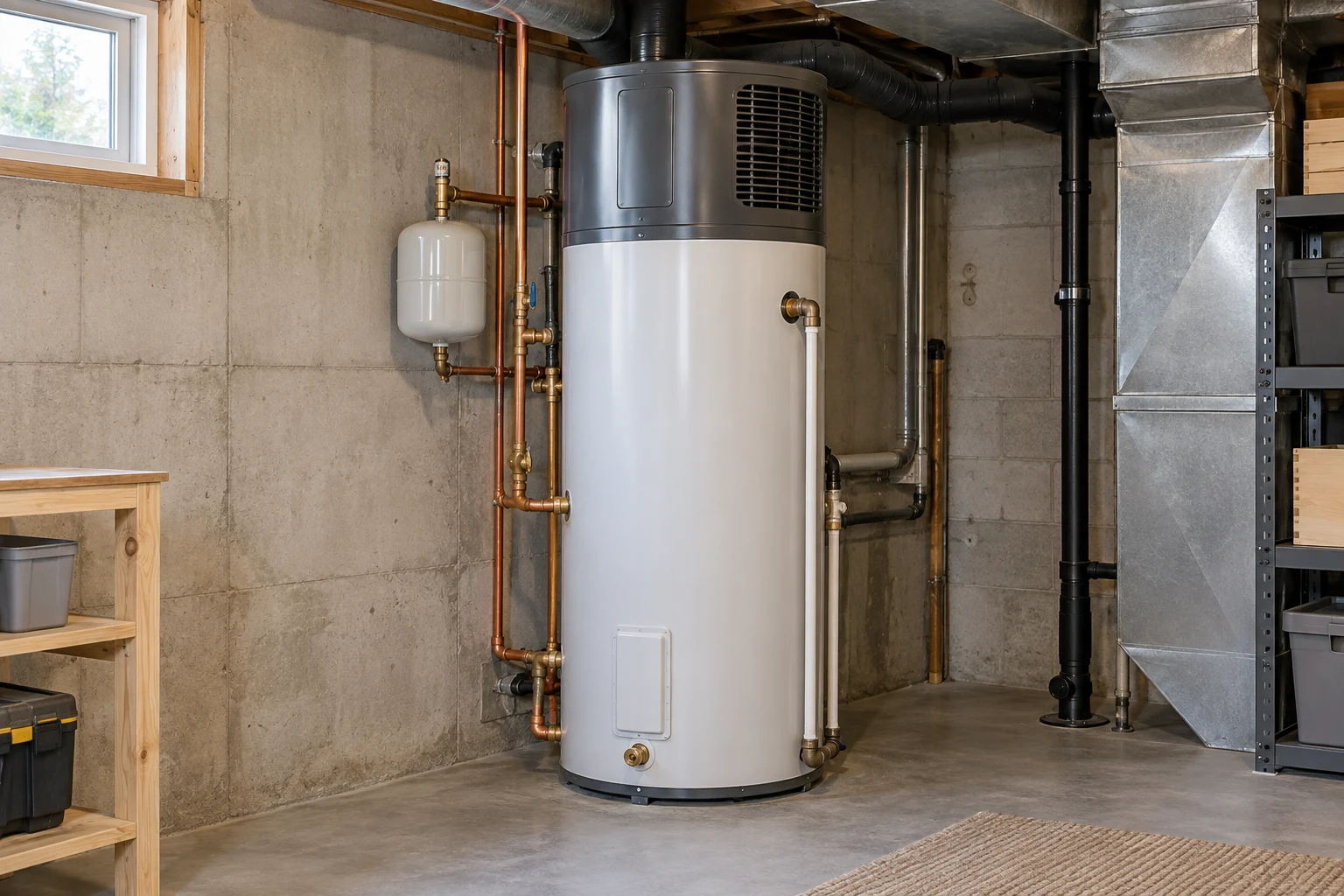
The best water heater is the one that meets your household’s hot-water demand and fits the home’s services and installation space. Compare storage tanks, tankless systems and heat-pump water heaters before deciding how to pay.
Begin with peak demand
Count the showers, baths and appliances that may run together. A family taking back-to-back morning showers has a different demand pattern from a household using hot water throughout the day. Tell the installer about future needs too. Replacing a unit with the same nominal capacity can be reasonable, but the old unit’s size is not proof that it was correctly selected.
Storage tanks: compare capacity and recovery
A storage tank keeps a reserve of hot water ready. Its capacity matters, but so does how quickly it recovers after that reserve is used. Ask whether the proposed tank will support your busiest period and what happens if demand exceeds it. Confirm the fuel source, venting arrangement and access for maintenance. A straightforward replacement can still need connection or code-related work.
Tankless: look at simultaneous flow
Tankless equipment heats water as it is needed rather than relying on a large stored volume. Ask the installer to size it for simultaneous fixtures and the incoming water temperature, not an appealing headline flow rate alone. Discuss gas or electrical supply, venting, servicing and water-quality requirements. Include all conversion work when comparing the quote with a tank replacement.
Heat-pump water heating: assess the room
A heat-pump water heater moves heat from the surrounding air into stored water. Discuss available room volume, temperature, sound, condensate drainage and electrical requirements. It can cool the space around it, which matters in a finished basement. Ask about recovery, operating modes and backup resistance heating. A promising efficiency rating does not replace a suitability check for the actual installation location.
Keep equipment choice separate from payment choice
Once the scope is clear, compare purchase, finance, rental and lease-to-own for that same system. Enbridge Sustain is one route to spread equipment costs and include agreement-based service. The payment plan should follow a suitable equipment decision. Ask for model numbers and an itemized installation scope before comparing monthly figures.
Prepare for the assessment
Have a photo of the current unit, its model plate, your recent energy bills and any rental agreement ready. Note leaks, inconsistent temperatures, running out of hot water or unusual sounds, but leave diagnosis and repairs to qualified trades. Our team can help organize the replacement options, relevant rebates and the right questions for your installation proposal.
Common questions
Is a tankless water heater the best choice for every Ontario home?
No. Peak flow, supply capacity, installation work, maintenance and budget determine whether it is a good fit.
Can a heat-pump water heater go in any basement?
The proposed model must suit the space, temperature, drainage, electrical supply and household demand. Ask for an installation assessment.
Should I choose the equipment or the payment plan first?
Establish the correct equipment and installation scope first, then compare ways to pay for the same project.
Sources & further reading
Enbridge Sustain equipment and agreement information rechecked October 5, 2026. Individual prices and transfer conditions follow your actual agreement.
Enbridge Sustain water heatingENERGY STAR heat-pump water heatersFind the right next step for your home.
We help you compare relevant programs, equipment options and the application sequence.
Review my hot-water options